Defining Woman as the "Other"
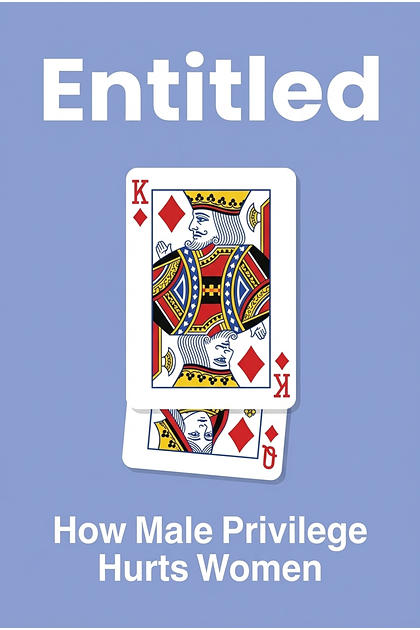
Humanity is fundamentally split into two categories, yet these categories are not treated as equal or symmetrical. When a man defines himself, he does so as a representative of the universal human type; his sex is a given that requires no explanation. For a woman, the first defining characteristic is her sex. In the history of human thought, man has positioned himself as the Subject and the Absolute, while woman is relegated to the status of the Other. This is not a mere biological distinction but a structural one. Just as various groups define themselves by creating an "other"—the foreigner, the Jew, the black, or the proletarian—men have defined women as the negative pole of the human experience.
This classification is unique because, unlike other oppressed groups, women have never formed a separate community with a shared history or a distinct culture. They are dispersed among men, tied more closely to their fathers and husbands than to one other. They lack the concrete means to organize as a unit because they are economically and socially integrated into the very structures that subordinate them. This bond is not the result of a historical event like a conquest or a revolution; it is a permanent condition rooted in a biological reality that has been interpreted to justify a hierarchy.
There is a persistent myth that femininity is an essence, a mysterious quality secreted by ovaries or enshrined in a spiritual realm. However, modern science and social observation suggest that what is called femininity is actually a reaction to a specific situation. The famous assertion that one is not born, but rather becomes, a woman highlights that the feminine identity is a cultural construct rather than a biological destiny. While females exist as a biological category, "womanhood" is a role imposed by society. This imposition is often masked by the concept of the "eternal feminine," a vague and shimmering ideal used to keep women in a state of immanence. By defining woman as a womb or a sexed being first and a human being second, man imprisons her in her body. He views his own body as a direct, objective link to the world, while he views the female body as an obstacle or a prison. This perspective allows men to claim objectivity and universality for themselves while dismissing women's thoughts as being dictated by their hormones or their subjective limitations.
The persistence of female subordination is partly explained by the advantages that come with accepting the role of the Other. To assert oneself as a sovereign subject requires "transcendence"—the active pursuit of goals and the assumption of the risks of freedom. This path is filled with anguish and stress. In contrast, the role of the Other offers a "temptation of facility." By accepting a status of dependence, a woman can avoid the metaphysical risk of inventing her own purpose. She is materially protected and her existence is justified by the man who claims her. This creates a deep complicity. Many women derive satisfaction from their role as the Other because it is an easier path than the struggle for independence. However, this is a degradation of existence. When a human being is turned into an object and doomed to stagnation, their freedom is stolen. The conflict for women lies in the tension between the fundamental human drive to be an essential subject and the societal pressure to remain an inessential object.
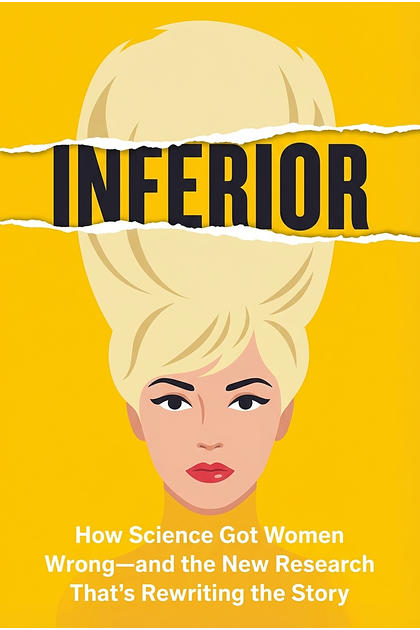
Throughout history, men have acted as both judge and party in the "woman question." From the morning prayers of religious traditions to the philosophical treatises of Aristotle and Saint Thomas, masculine supremacy has been presented as a divine or natural right. Lawmakers, priests, and scholars have consistently worked to prove that women's subordinate status is beneficial for society and willed by heaven. Even as the Industrial Revolution brought women into the workforce, the bourgeoisie clung to traditional values to protect private property and male authority. When traditional religious or philosophical arguments began to fail, antifeminists turned to science to prove female inferiority. They adopted formulas like "separate but equal," which served the same purpose as segregation laws: maintaining a hierarchy while paying lip service to equality. The ruling caste always bases its arguments on the very state of affairs it created. Just as a white American might relegate a black person to a menial job and then conclude that they are only fit for such work, men keep women in a situation of inferiority and then use that inferiority to justify their continued dominance.
The goal of analyzing the feminine condition is not to measure happiness, but to evaluate freedom. Happiness is a vague and subjective term often used to justify the stagnation of others—claiming, for instance, that a housewife is "happier" than a worker to discourage her from seeking independence. Instead, the focus must be on the concrete opportunities available to individuals to surpass themselves through projects and to move toward an open future. Modern women are in a unique position to evaluate this situation with a degree of impartiality. Having won many legal and social battles, they can now look at the fact of being female not as an insurmountable obstacle, but as a specific situation to be understood. Achieving independence within a state of dependence requires a significant moral effort. It involves refusing to be a mere reflection of masculine ideas and rejecting the myths that serve the interests of the oppressor. True fraternity between the sexes can only be born when both men and women recognize each other as essential freedoms, moving beyond the false privileges of the past toward a shared human reality.